Why New Zealand Hair Frizzes — And Why Queenstown is Particularly Challenging
Frizz is not a hair type. It’s a response — the hair cuticle reacting to its environment. Understanding why it happens in New Zealand specifically makes it a lot easier to prevent, because the solutions are different depending on the cause.
New Zealand has unusually high UV radiation year-round — including in winter and at altitude. UV damages the hair cuticle over time, roughening its surface and making it more porous. More porous hair absorbs and loses moisture faster, which means it responds more dramatically to changes in humidity. Add Queenstown’s alpine wind and rapid temperature changes throughout the day, and you have a particularly challenging environment for maintaining smooth, frizz-free hair.
The Two Types of Frizz — and Why They Need Different Solutions
Most frizz falls into one of two categories, and treating the wrong type with the wrong product makes things worse.
Humidity frizz happens when moist air penetrates the hair shaft and causes the cuticle to swell. The hair absorbs water from the atmosphere and expands unevenly — smooth hair puffs, curls lose definition. The fix is sealing the cuticle before you step outside: a smoothing oil or cream on damp hair creates a barrier that slows moisture absorption.
Dryness frizz happens when the hair is dehydrated and the cuticle lifts in search of moisture. This is common in Queenstown’s alpine winter, in heated indoor environments, and in hair that’s been colour-treated or heat-styled without adequate conditioning. The fix here is different: the hair needs moisture added, not just sealed in. A rich conditioner, a weekly mask, and reduced wash frequency are the starting points.
In practice, many clients have both — hair that’s dehydrated but also exposed to humidity. The approach is to address dehydration first, then seal.
Building an Anti-Frizz Routine for NZ Conditions
This is what we recommend to frizzy-haired clients in our Queenstown salon:
- Start with the right shampoo and conditioner. Amika Frizz-Me-Not Smoothing Shampoo and Conditioner is our go-to for clients whose primary concern is frizz. The formula seals the cuticle through the wash process — not just a coating applied afterwards. Condition generously through mid-lengths and ends every wash.
- Apply a treatment oil to wet hair immediately after washing. This is the most impactful single step. Moroccanoil Treatment applied to towel-dried hair before blow-drying seals the cuticle while it’s clean and open, trapping moisture inside before drying begins. A small amount — the size of a 10-cent coin — is enough for most hair lengths.
- Blow-dry with the airflow pointing down the shaft. Blow-drying with the nozzle pointing down rather than across the hair forces the cuticle flat and closed. It’s a technique difference that makes a significant impact on smoothness and shine.
- Don’t touch the hair while it’s drying (if air-drying). Every touch disrupts the cuticle as it settles. Let it dry undisturbed.
- Weekly deep conditioning. The Amika Soulfood Nourishing Mask once a week keeps the hair’s moisture levels consistent, which reduces the cuticle’s reactivity to external conditions. Consistently well-hydrated hair frizzes less.
What a Hairdresser Can Do That Products Can’t
Products manage frizz at the surface level. In-salon treatments address it structurally. If your frizz is severe, persistent, or has worsened over time, there are a couple of in-salon options worth discussing:
- Bond repair treatment. If frizz is caused by damage to the hair’s internal structure — from bleaching, heat, or chemical processing — an Olaplex in-salon treatment rebuilds broken bonds and improves the hair’s structural integrity. Frizz caused by damage often improves dramatically after a course of bond repair.
- Colour gloss or toning service. A gloss treatment seals the cuticle across the entire hair shaft, adding intense shine and reducing frizz for several weeks. It’s not a permanent solution but it’s effective and noticeably improves texture.
If frizz is your main hair concern, mention it specifically when you book at Iron + Ivy — we’ll factor it into the service recommendation and the products we send you home with.
Frequently Asked Questions
Why is my hair so frizzy in New Zealand?
New Zealand’s climate varies dramatically by region, but the common factors are high UV, coastal or alpine humidity, and wind — all of which affect the hair cuticle. When the cuticle lifts (either from dryness or from absorbing atmospheric moisture), the hair shaft becomes rough and light scatters irregularly — which is what we see as frizz. Queenstown specifically adds alpine wind and rapid weather changes to the mix.
What is the best anti-frizz product for NZ conditions?
For daily frizz control, Amika Frizz-Me-Not Smoothing Shampoo and Conditioner provides a solid base that seals the cuticle through washing and conditioning. Layer with Moroccanoil Treatment applied to damp hair before styling — it smooths, conditions, and provides heat protection. For very frizzy or thick hair, a dedicated smoothing serum through the ends adds additional control.
Does humidity cause frizz?
Yes — but so does dryness, and for the same reason. In humidity, the hair cuticle absorbs moisture from the air and swells, causing it to lift and creating frizz. In dry conditions, the cuticle lifts because the hair is seeking moisture that isn’t in the air. Sealing the cuticle before exposure — with an oil or leave-in treatment on damp hair — addresses both scenarios.
Is frizzy hair damaged hair?
Not necessarily. Some hair is naturally frizzy due to texture, porosity, or curl pattern — not damage. However, damage does cause frizz: bleaching, heat styling, and chemical processing all roughen the cuticle and can make previously smooth hair frizzy. If your hair has become progressively frizzer over time with no change in climate or routine, damage or dehydration is the likely cause.
Can a haircut help with frizz?
Yes. Split ends and dry ends travel up the shaft and contribute to a frizzy finish. A trim removes the most damaged section and immediately improves the overall look of the hair. Additionally, certain cut techniques — removing bulk through the mid-shaft rather than the ends, or specific layering approaches — can reduce the heaviness that causes frizz in thick hair. Ask your stylist at Iron + Ivy about a dry cut assessment if frizz is an ongoing issue.
About Iron + Ivy Hair Studio
Iron + Ivy is Queenstown’s award-winning hair studio, located inside Queenstown Central Shopping Centre on Grant Road. Our team of specialist stylists bring real expertise and a genuine love of hair to every appointment — whether that’s a colour transformation, a lived-in balayage, a precision cut, or bridal hair for a wedding in the mountains. We work with a focused clientele because exceptional hair takes time, skill, and care. You’ll always leave knowing exactly what went into your hair and how to look after it at home.
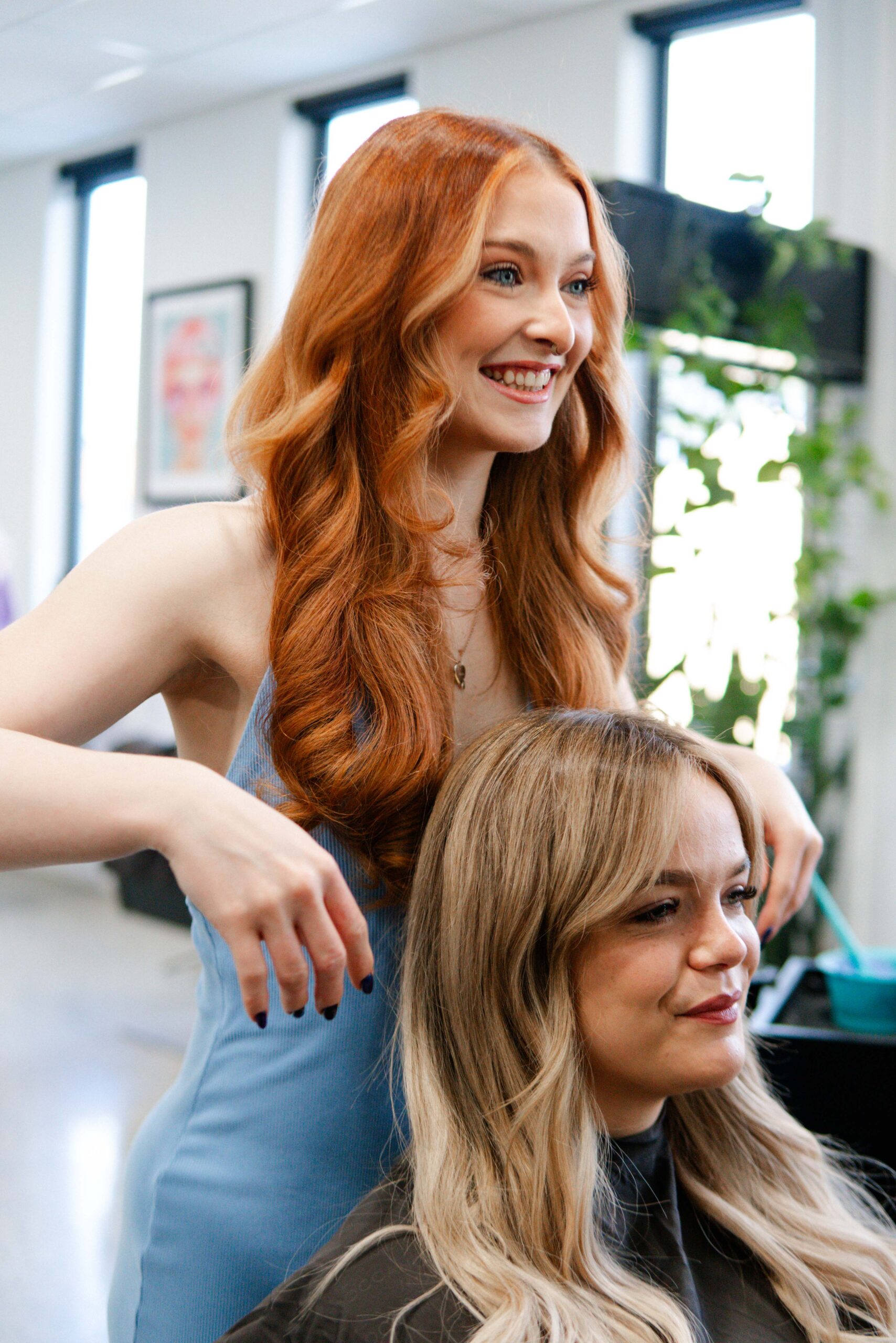
Ready to experience the difference? Book at Iron + Ivy Studio, Queenstown.
Ready to visit Iron + Ivy? Explore our Queenstown balayage service, our Queenstown hair extensions, or our Queenstown blonde specialist services — or book a consultation today.
BACK TO BLOG